Showing posts with label crime. Show all posts

Saturday, May 3, 2014

Book Clubs - Writer's Aids & Collaborators

Book Clubs are a remarkable source for input and participation. As a writer, I do a lot of them for my Novel Hot-Walker, Life on the Fast Track. I value everyone's opinion and especially for my book full of fast cars, romance, horse racing, crime, suspense, sports, murder, courtroom drama etc etc ... I truly appreciate the thoughts from others to improve on its readability.


The 'proof' is published into a printed book (draft). This way the club members purchase the book at printers cost, and then after reading it, gather at a pot-luck dinner or lunch meeting to draw-up several deep discussions for the author, me. Book Critiques held in honor of the author have a gathering of 8 - 10 people for wine/desserts, coffee/treats, or chilled smoothies on a hot summers day. But the idea is to have a couple of hours to dig into the nitty-gritty depths of the book to discuss the good and bad of the storyline, writing style, characters and offer their personal opinions without worry, knowing it is valuable information for the creator. The reader becomes the writers storyline editor.


Not everyone is a writer, and there are usually a few pretty harsh comments from those who just are there to criticize and go on and on, but a good host will recognize these individuals and encourage others to speak-up and move on to a different topic ... like the cover design, for instance. I especially like to know what sections of the story they enjoyed, just as much as the parts they didn't. Was it because of the information, did it drag on too long, was there a character they didn't connect with, or perhaps they didn't like the style of writing.... etc.


A few book clubs prefer to have the novel in ebook form because it is easier for them to highlight the areas and make their own notes. 
Once a group learns that the storyline is actually taken from my life experiences, they gain a different view, especially the men in the groups. But I think most writers use personal experiences, a lot of the time. For me and the novel Hot-Walker, Book Clubs perform best when men participate. They have offered me valuable info... enjoy the racetrack scenes and information but not as fussy on the harlequin sections. They have recommended that the last section of the novel describing the murder and courtroom drama would be better with flash-backs concerning these other areas. For them, the travel, relationships and  grieving the death of the main character's fiance would be better written in smaller doses and the story would be more readable for them.The women comment on a different point of view. They prefer the growing and changing relationships, romance, travel and looking at the different professions of the characters throughout the 30 years that the storyline covers. All their information is important to the writer because it is the reader who spreads the word about a good or interesting book.


And so what now? Well, Hot-Walker was originally written 30 years ago. I have been picking it up and putting it down since it was completed in 1984. Writing, editing, and reducing from 150,000 words to 110,000 word manuscript has been a challenge. I originally had the idea it should be for screen, film or TV. It is time to listen to my readers, take their many suggestions and make them a reality, and get on with it. Get it published, ebook it and work on my third novel. Some of the positives about Hot-Walker were ....

 I thought about it for weeks after I read it. 
Found the courtroom procedures very interesting.
Enjoyed reading about Toronto, Yorkville Village, and racetrack life in the 1960s.
The storyline was good, just needs some editing.
Great research, and could work as a movie.
The characters are realistic and the story is authentic, loved the woman jockey.


Back to the drawing board, so to speak, as many local readers provide more book clubs and author critiques for the upcoming year. I am grateful to the dozens of groups who have previously participated and offer their opinions which are sincerely valued. 


BOOK TRAILER:   


~ Mallory ~

Thank you for sharing this blog with your friends.


Sunday, February 16, 2014

MURDER TRIAL, Toronto 1977 ... from the novel Hot-Walker

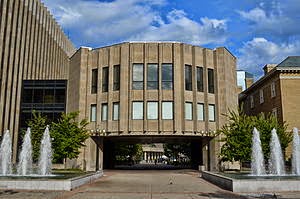
Toronto Court House

The saga of Hot-Walker; following the life of Francine Harrison during her years of racing thoroughbreds, living in Yorkville, Montreal, London, and then returning to Toronto where the murder trial of her fiance, an American draft dodger brutally killed at Woodbine racetrack, 1969, is being held. As the only witness to the horrific incident, Francine struggles with relationships during the years awaiting trial, hopelessly making an effort to move on with her life, until the mystery unwinds in 1977 at the Court House...


During the years when Francine and her friends lived in Yorkville Village, the first phase of the complex, Toronto Courthouse, (Completed by Toronto firm of Marani, Rounthwaite and Dick Architects) was opened (1966) at 361 University Avenue and the corner of Armoury Street. It was originally known as Metropolitan Toronto Courthouse. Additions to the structure were completed with the South Wing (1985) and a two storey addition to the courthouse (1987).


The project architect, Ronald A. Dick noted it as an important example of late 20th century Modern design, the largest of its type built in Ontario ... featuring an eight-storey complex for courtrooms and offices connected to the three-storey South Wing. This features a 12-sided plan with an open passageway in the lower level. Covered by a copper-clad roof, the structure is faced with limestone.


The north and south elevations feature fin walls that organize the horizontal grid of metal-framed window openings and limestone spandrels with beveled edges. The courthouse structure was among the last complexes in the province clad with local limestone. Amongst the landscaping, planter boxes, flagpoles and shallow pools with fountains, you would find limestone benches.


 But ... there is a hidden ancient mystery held in the construction of such 'temples' as those within secret societies were aware of, which is limestone is calcite that is formed by rainwater filtered through sand; a sedimentary stone and holds basic properties essential to life, namely the attribute of attracting atmospheric water vapour, condensing it into water, and then letting it pass out into streams and springs. 

Limestone works like a crystal; it is in constant motion emitting a vibrational frequency that amplifies the energy of the surrounding area and matches the electromagnetic field of the Earth and its human occupants. It also has the crystalline property to absorb, store, and transfer life-force energy. Limestone was used for construction because of these crystalline properties ... which are those of resonance, rhythm and vibration ... it is alive, holding the memory of information and like crystals, healing vibrations.

Hot-Walker, Life on the Fast Track  Book Trailer for your viewing.


Tuesday, January 28, 2014

LONDON, 1970s .. Hot-Walker novel has international intrigue!

Escape to London, 1974-75

 Following the path of Hot-Walker ... a close group of high school friends from the mid 1960s go their separate way following the murder of Francine Harrison's American fiance, John Mencini, at Woodbine Racetrack in Toronto. Horse racing and their years together become a distant but haunting memory as she recovers, grieving and waiting for answers to the horrific killing she witnessed. Feeling it is time to move on as the years pass by, Francine leaves her friends in Toronto, escaping to Europe in 1972, whereby new relationships unfold. She eventually moves to London .... always waiting for notification of trial requesting her return to Toronto.


Francine's years  in London during the mid 1970s were emotional and unsettling, full of change as history was being made throughout the country as well as in the rest of the world. It was a time of many Pub bombings, which happened everywhere from local neighborhood haunts to the busiest Tube stations along rush hour routes. There was a Fuel crisis and the government issued new speed limits to save gas at a time of Arab fuel embargoes. Inflation soared to 17.2%, an unbelievable increase.

The Prime Minister Margaret Thatcher defeated Edward Heath in the Conservative party leadership election at age 49 and parliament was under new unfamiliar leadership, for many politicians. The country was devastated with terrorism, train crashes, and protests that made headlines around the world, weekly. The airports were guarded, locations closed and yet the workers scrambled daily to work as London held its own. The number of jobless reached 1.25 million.

In the entertainment field, Led Zeppelin played at Earls Court with 5 sold-out concerts, and the first public performance by punk rock band Sex Pistols performed publicly. Fashion, music, sports never paused a beat as the rest of the country tried to keep up with the changes of its own growing pains.


Women were recognized publicly, even in the field of education as five all male colleges accepted women undergraduates. In fact, the first female rabbi in Britain – Jackie Tabick was announced. These shocking changes took many Brits by surprise as England was altering its ways. The country became part of the European Space Agency and in transportation, Britain’s first production small hatchback was launched by Vauxhall Chevette.  On television the first episode of the series Fawlty Towers televised and immediately became a big hit across the land. 


Car racing was a popular sport in England even before Sterling Moss drove, but for fans all over the world, when race car driver Graham Hill died in an air crash at the age of 46, it was a shock that upset the whole racing community.

On a lighter note, the new Covent Garden Market, which was the largest wholesale fruit and vegetable and flower market in UK (SW London) covering 57 acres in Nine Elms, opened for business and was a huge success.

The 1975 record rainfall at 169 mm fell in the prestigious area Hampstead Heath in 155 minutes leaving the residents in a state of panic and discord which took months to clear and repair damages.


London, 1974-75

HOT-WALKER TRAILER:    http://www.youtube.com/watch?v=izWWQh8Odqk
for your viewing

Sunday, November 10, 2013

YORKVILLE, sets the scene in HOT-WALKER known as Toronto's counter-cultural mecca.

In the novel ... HOT-WALKER recalls the life and times of a young innocent woman, Frannie Harrison, who sets out to find her own life in the turbulent 1960s where anything goes. Ultimately, she ends up in an area of young people living in one of Toronto's oldest adjoining villages, YORKVILLE, founded in 1830 by entrepreneur Joseph Bloore. It began as a residential suburb. The village grew enough to be connected by an omnibus service in 1849 to Toronto.
 By 1853, the population of the village had reached 1,000. Development increased and by the 1870s more land was needed and Potter's Field, a cemetery stretching east of Yonge Street along the north side of Concession Road (today's Bloor Street) was closed, and the remains moved to the Necropolis and Mount Pleasant cemetery.
By the 1880s, the cost of delivering services to the large population of Yorkville was beyond the Village's ability. It petitioned the City of Toronto to be annexed. Annexation came on February 1, 1883, and Yorkville's name changed officially from "Village of Yorkville" to "St. Paul's Ward". The character of the suburb did not change and its Victorian-style homes, quiet residential streets, and picturesque gardens survived into the 20th century.
In 1923, the Toronto Hebrew Maternity and Convalescent Hospital was opened at 100 Yorkville Avenue and a year later the name was changed to Mount Sinai Hospital. The facade of this building still stands today.


Cheap rent in the Village.
And then ... some forty years later, Yorkville became known as  "a festering sore in the middle of the city" with a new generation of alternative lifestyles who changed the scene and the area became dominated with hippies and young people from all walks of life. 
HOT-WALKER takes place in the 1960s when Yorkville flourished as Toronto's counter-cultural mecca. The hip Village's development from its early coffee house days, when folksingers such as Neil Young and Joni Mitchell flocked to the scene, to its tumultuous, drug-fueled final months. Yorkville was also a battleground over identity, territory, and power. This neighbourhood soon came to be regarded as an alternative space both as a geographic area and as a symbol of hip Toronto in the cultural imagination, as then underground literary figures, such as Margaret Atwood, Gwendolyn MacEwen and Dennis Lee appeared regularly in the area. 
Yorkville was also known as the Canadian capital of the hippie movement and by the late 1960s folk music had given way to folk-rock and then psychedelic rock and Yorkville was bustling with electric as well as acoustic performances. In total, there were as many as 40 clubs and coffeehouses offering live entertainment every night of the week, and music lovers could hop from venue to venue to catch a seemingly endless number of acts. In 1968, nearby Rochdale College at the University of Toronto was opened on Bloor Street as an experiment in counter-culture education. Those influenced by their time in 1960s-70s Yorkville, include cyberpunk writer William Gibson. The Victorian homes became seedy, contaminated, uncared for and turned into a dangerous location.
Transition into high-end shopping district
It was after the construction of the Bloor-Danforth subway when the value of land nearby increased as higher densities were allowed by the City's official plan. Along Bloor Street, office towers, the Bay department store and the Holt Renfrew department store displaced the local retail. As real estate values increased, the residential homes north of Bloor along Yorkville were converted into high-end retail, including many art galleries, fashion boutiques and antique stores, and popular bars, cafes and eateries along Cumberland Street and Yorkville Avenue. Many smaller buildings were demolished and office and hotels built in the 1970s, with high priced condominium developments being built. Today, the remains of the Victorian homes that line the side streets are owned by the wealthy and most have been renovated beyond recognition as it is now classified as one of the 'most expensive' retail districts in North America.

Wednesday, November 6, 2013

Racetrack history from 'Hot~Walker'. - Greenwood and Woodbine Racetracks

Hot~Walker begins its racetrack ventures in 1965 at Greenwood Racetrack, a horse racing facility in Toronto, inaugurated in 1874 as Woodbine Race Course at the foot of Woodbine Avenue and Lake Ontario. The novel tells the story of the murder trial of Francine Harrison's fiance, an American draft dodger, John Mencini who trained thoroughbreds. 
Racing has had a long history in the Toronto area. In the early 1880s, Duggan founded the Ontario Jockey Club (OJC). Thoroughbred racing continued at Old Woodbine on a shortened six furlong (1,207 m) track and Harness races were conducted on the thoroughbred track, but serious problems with mud (including the starting gate being immobilized) led to the construction of a five-furlong (1006 m) stone dust harness track inside the thoroughbred track. This track was known for its tight turns and long back and homestretches.
In the early 1950s, the Ontario Jockey Club, led by directors E. P. Taylor, George C. Hendrie and J. E. Frowde Seagram, undertook an acquisition and consolidation program for southern Ontario racing. By 1956, the OJC operated a new facility for Thoroughbred horse races, which was constructed in Toronto suburbs, and given the name  New Woodbine Racetrack. This was the location and setting for the racehorse, SnoMann, and his big win in 1969,


The Old Woodbine facility was completely renovated and renamed Greenwood Raceway in 1963. It held both harness racing and thoroughbred racing meets until its closure at the end of 1993. Steeplechase races were held at Woodbine/Greenwood for a few years. 
In 1994, the thoroughbred and harness operations were moved to Woodbine. The stadium was demolished and replaced by residential and commercial development, including a betting parlour. Half of the property became Woodbine Park. It is the only horseracing track in North America which stages, or is capable of staging,thoroughbred and standardbred horseracing programs on the same day.